What Is a Tailgate Latch? How It Works, Problems, and Repairs
Many truck and SUV owners ask what is a tailgate latch because this small part plays a major role in daily use. The latch holds the tailgate in place while driving and allows the driver to open it when needed.
From my experience with basic vehicle maintenance, I have found that tailgate issues often start with simple latch problems. Dirt, wear, rust, or damaged parts can make a tailgate harder to open or keep closed.
Understanding what is a tailgate latch helps vehicle owners spot problems early. This knowledge can save time, prevent damage, and improve safety during regular driving or hauling tasks.
What Is a Tailgate Latch and What Does It Do?
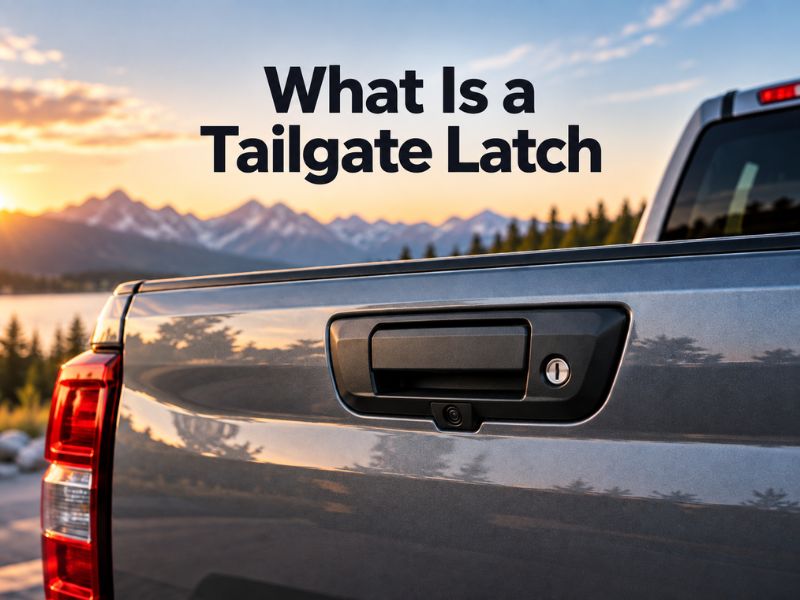
A tailgate latch is a mechanical or electronic locking device installed on the rear door of a pickup truck, SUV, or similar vehicle. Its main job is to keep the tailgate closed until someone uses the handle or release button.
The latch works with other parts, including the tailgate handle, cables, rods, and locking clips. When these parts work together, the tailgate opens smoothly and stays secure while the vehicle moves.
- ✦ Locks the tailgate
The latch grips the striker or locking point to hold the tailgate shut.
- ✦ Allows controlled access
The latch releases when the handle or power system activates the opening mechanism.
- ✦ Improves safety
A working latch helps prevent the tailgate from opening unexpectedly while driving.
Where Is the Tailgate Latch Located?
The tailgate latch is usually found inside the tailgate assembly near the side edges. Many trucks use two latch points, one on each side, to provide a stronger hold.
How Does a Tailgate Latch Work?
A tailgate latch uses a simple locking process. When the tailgate closes, the latch grabs a fixed striker attached to the vehicle body. This connection keeps the tailgate closed.
When a driver pulls the handle, the latch releases the striker. Some newer vehicles use electronic controls that activate the latch with a button or remote.
- ✦ Manual latch systems
These systems use a physical handle, rods, and springs to open and close the latch.
- ✦ Power tailgate systems
These systems use electronic switches and motors to control tailgate movement.
Common Tailgate Latch Problems and Warning Signs
A damaged tailgate latch can affect convenience and safety. Many problems develop slowly, giving owners signs before complete failure happens.
If your tailgate feels loose, does not close correctly, or requires extra force to open, the latch may need inspection.
- ✦ Tailgate will not open
A stuck latch, broken handle connection, or damaged release cable may prevent opening.
- ✦ Tailgate will not stay closed
A worn latch may fail to grip the striker securely.
- ✦ Hard or rough operation
Rust, dirt, or lack of lubrication can make the latch move poorly.
Why Tailgate Latches Fail
Common causes include weather exposure, repeated use, corrosion, broken springs, and damaged internal parts. Trucks used for work or outdoor activities may experience more wear because the tailgate is opened frequently.
- ✦ Weather damage
Rain, snow, and road salt can cause corrosion over time.
- ✦ Normal wear
Moving parts can weaken after years of regular use.
How to Maintain a Tailgate Latch
Proper care can extend the life of a tailgate latch. Simple maintenance steps can help keep the mechanism working smoothly.
Many vehicle owners can handle basic cleaning and lubrication at home. More serious damage may require professional repair.
- ✦ Clean the latch area
Remove dirt and debris that can block movement.
- ✦ Use proper lubricant
Apply automotive lubricant to moving parts as recommended by the vehicle maker.
- ✦ Inspect for damage
Check for rust, loose parts, or signs of wear during routine maintenance.
Replacing a Faulty Tailgate Latch
Replacing a tailgate latch depends on the vehicle design and the type of failure. Some owners with mechanical experience can replace simple latch assemblies, while others may need a repair shop.
A correct replacement should match the vehicle model and include all needed hardware. Using the right part helps restore proper tailgate function.
- ✦ Check the vehicle model
Different trucks and SUVs use different latch designs.
- ✦ Inspect related parts
Handles, cables, and rods may also need attention when replacing a latch.