How to Reset a Tailgate Latch: A Practical Step-by-Step Guide
A tailgate that will not close, will not open, or suddenly feels loose can make a simple loading job surprisingly difficult. In many cases, the latch is not broken at all. One or both latch jaws have moved into the closed position while the tailgate is open, so they cannot capture the striker pins when you try to shut it.
Learning how to reset a tailgate latch usually means returning the latch jaws to their open position, checking that the handle or actuator releases them, and testing the tailgate without slamming it. The exact shape of the mechanism varies by truck, SUV, and model year, but the basic inspection is similar.
This guide explains a cautious method for a beginner, including what to look for, how to reset a manually operated latch, how power tailgates differ, and how to confirm the repair. It also identifies situations that call for a service manual or qualified technician instead of more force.
At a glance
- A latch that is closed while the tailgate is open can often be returned to its open position with a screwdriver and the handle released.
- Keep fingers away from the latch jaws and striker pins while testing the mechanism.
- Test engagement gently several times before carrying a load or driving the vehicle.
How to reset a tailgate latch safely
The reset works by relieving pressure on the latch, operating the release handle, and rotating the latch pawl—the moving part that grips the striker—back to its ready position. Begin with the tailgate supported and the vehicle parked securely. Do not assume the procedure is identical on both sides, because some tailgates use a single center latch while others use two side latches connected by rods or cables.
Tools you will need
- Flashlight, to see the latch opening and release linkage
- Flat-head screwdriver or blunt trim tool, to rotate a stuck latch pawl carefully
- Work gloves, to protect your hands from sharp sheet metal
- Clean rag and a small amount of vehicle-safe lubricant, for cleaning and light lubrication
- Owner’s manual or model-specific service information, especially for a power tailgate

Step 1 Park securely and identify the latch type
Park on level ground, select Park or first gear as appropriate, set the parking brake, and switch off the ignition. If the tailgate is powered, keep the key fob away from the operating area and disable the power function according to the owner’s manual before placing your hands near the mechanism.
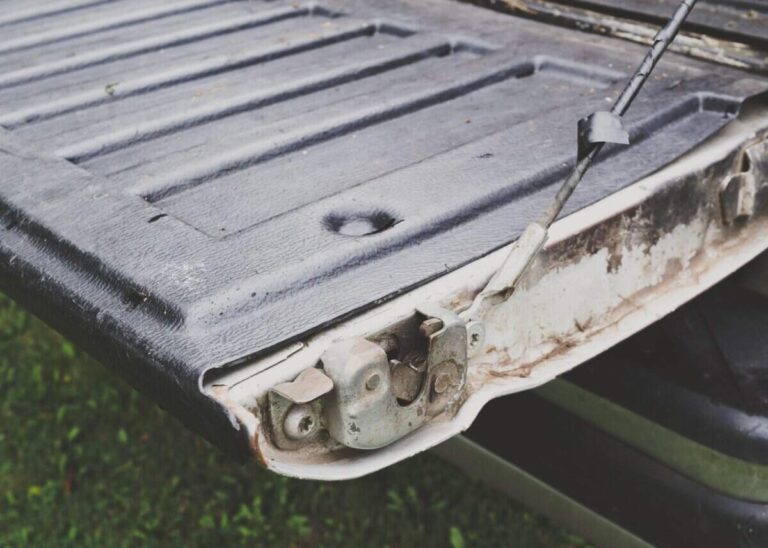
Look at the edge of the open tailgate or at the body-side opening where the tailgate meets the vehicle. You are looking for a metal or composite latch assembly with a slot or hook-shaped opening. The vehicle body has a matching striker pin, which is the fixed metal pin that enters the latch when the tailgate closes.
Observe whether the latch is manual or powered. A manual latch usually has a cable, rod, or lever moved directly by the exterior handle. A power tailgate may have an electric actuator, a motor, pinch protection, and position sensors.
You can inspect a powered mechanism, but do not bypass sensors or repeatedly command it to move while your fingers are near the latch.
Step 2 Relieve pressure and inspect for an obstruction
If the tailgate is partly closed, do not pull hard on the handle while pushing against a heavy load. Move cargo away from the tailgate if possible, then support the panel as you open it. Pressure from an uneven load or a shifted bed mat can hold the latch tightly against the striker.
With the tailgate open, use the flashlight to check for dirt, stones, damaged plastic, bent rods, loose clips, or a cable that has slipped from its guide. A latch can appear “reset” but fail again if something is blocking the jaw or preventing the release lever from returning.
Do not put a finger into the latch opening. The moving jaw can close suddenly if the release linkage is moved, and the surrounding metal edges may be sharp. Use the screwdriver only by its handle and keep your other hand outside the path of the latch.
Important
Never test a tailgate latch with a hand, finger, or tool placed where the striker pin normally enters. The mechanism can snap shut with enough force to pinch skin or damage the tool.
Step 3 Operate the release handle while watching the mechanism
Pull and hold the exterior tailgate handle, interior release, or manual release lever—the control that normally opens the tailgate. Watch the latch as you do this. On a working mechanism, the release lever should move and the pawl should rotate or spring toward the open position.
If the latch is already open, you will see a clear opening ready to receive the striker. If it is closed, the rotating jaw will block that opening. On a two-latch system, check both sides; one side may release while the other remains locked.
This observation matters because it separates a simple reset from a broken linkage. If the handle moves freely but the latch does not move, the cable or rod may be disconnected, stretched, or broken. If the handle is hard to move and the latch does not respond, corrosion or an internally damaged latch is more likely.
Step 4 Return the closed latch pawl to the open position
Keep the release handle pulled, then use the flat-head screwdriver to rotate the latch pawl slowly toward its open position. The correct direction is the direction that enlarges the latch opening and allows the striker pin to enter. Do not pry against painted bodywork, wiring, or the striker.
On many mechanisms, holding the handle open releases the catch while the screwdriver turns the jaw. You may hear or feel a click when the pawl passes its detent and returns to the ready position. Stop as soon as the opening is clear; forcing it beyond that point can bend the latch or release linkage.
If the latch will not rotate with light, controlled pressure, stop and inspect again. A screwdriver should not be used as a lever to overcome a jammed or bent mechanism. Spray a small amount of appropriate lubricant onto the pivot area only if the owner’s manual does not prohibit it, then work the handle gently.
Avoid flooding the latch, because excess lubricant can collect grit.
Step 5 Reset every latch on the tailgate
Check the opposite side if the tailgate has two latches. Both latch openings should be in the same ready-to-catch position, and both should respond when the release handle is operated. A single reset latch will not reliably secure the panel if the other side remains closed, jammed, or disconnected.
Inspect the connecting rod, cable, or bell crank between the handle and each latch. A retaining clip that has popped out may leave one latch inactive even though the handle still feels normal. Do not substitute a random wire or improvised fastener for a missing retaining clip; the tailgate may appear closed but could open while driving.
At this point, the latch should remain open without the screwdriver holding it. Pull the release handle once more and release it. The lever should return, and the latch should still be positioned to receive the striker.
Step 6 Clean and lightly lubricate the mechanism
Wipe away dirt, old grease, and moisture from the visible latch surfaces with a rag. If the mechanism is heavily contaminated, use a cleaner approved for the vehicle’s materials and allow it to dry before lubricating. Keep cleaner away from electrical connectors unless the product is specifically intended for them.
Apply a small amount of white lithium grease or another lubricant specified by the manufacturer to the latch pivot and contact points. A silicone-based product may be appropriate for nearby rubber seals, but it is not automatically the best lubricant for every metal latch. Do not coat the striker with a thick layer that can attract abrasive dust.
Move the handle several times and watch the latch cycle. It should move smoothly and return fully rather than stopping halfway. Lubrication can improve a dry mechanism, but it cannot repair a cracked housing, bent pawl, failed actuator, or badly misaligned tailgate.
A useful way to approach how to reset a tailgate latch is to check your progress after each stage.
Step 7 Close the tailgate gently and confirm engagement
Stand clear of the latch opening and lower the tailgate slowly. Let the latch meet the striker without slamming the panel. You should hear a solid engagement, and the tailgate should sit flush with the surrounding body rather than remaining proud on one side.
Try to lift the tailgate gently from the outside without pulling the release handle. It should remain closed with no obvious movement. Then operate the handle normally and confirm that the latch releases and the tailgate opens smoothly.
If the tailgate does not catch, stop before driving. Reopen it, inspect whether the latch returned to the open position, and check whether the striker is centered in the latch opening. Repeated slamming can worsen an alignment problem and may damage the latch actuator or the tailgate skin.
Step 8 Perform a low-risk final function test
Close and release the tailgate several times while the vehicle remains parked. Use normal hand pressure rather than dropping the panel. For a power tailgate, restore the system only after the latch area is clear, then use the normal switch while standing to the side and watching for smooth movement.
Confirm that the instrument panel does not report an open-tailgate warning when the tailgate is closed. Also check the interior lamp, if the vehicle uses one, because a warning or lamp that stays on can indicate that the latch sensor is not recognizing full engagement.
Before carrying cargo or driving, verify that the tailgate cannot be pulled open without the release control. If it still rattles, sits unevenly, or shows a warning message, treat the reset as unsuccessful even if the latch seems to catch.
Why a tailgate latch gets out of position
A latch can move into its closed position when the tailgate is open and the release handle is pulled, when the panel is shut against an obstruction, or when the striker pushes the pawl partway through its travel. In that condition, the latch is behaving as though it has already captured the striker, so the tailgate cannot close normally.
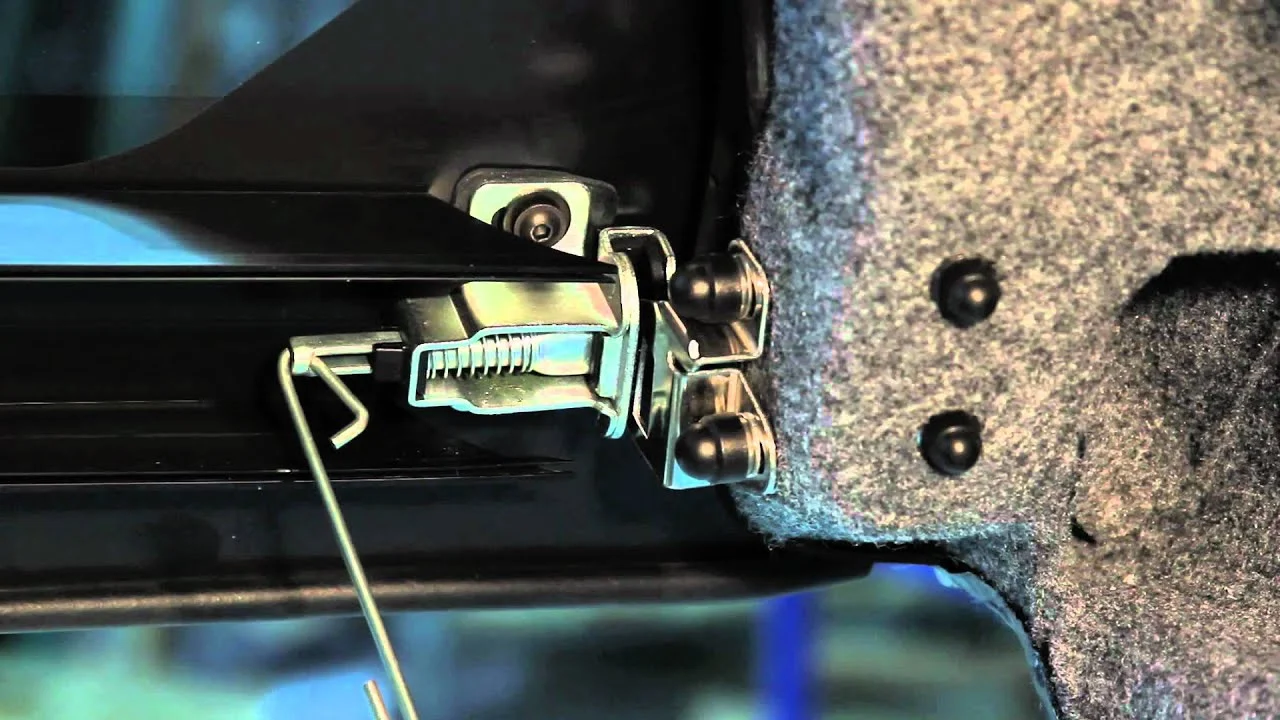
Many tailgate latches contain a rotating claw or pawl, a spring, a release lever, and a secondary safety catch. The first catch holds the tailgate during normal use; the secondary catch helps prevent a fully unsecured panel from opening if the first catch does not engage correctly. These parts must move freely and align with the striker.
Misalignment is another common cause. A tailgate can shift slightly after an impact, an overloaded cargo area, loose hinges, or repeated use. If the striker is too high, low, or far to one side, the latch may catch only partially or require excessive force.
Manual and power tailgates are not identical
A manual tailgate generally allows the release handle to be felt directly through a cable or rod. Resetting the pawl with the handle held open is often straightforward when the latch is merely out of position.
A power tailgate adds an actuator and control system. The motor may resist manual movement, and the vehicle may need a relearn or initialization procedure after a fault, battery disconnect, or interrupted closing cycle. Use the owner’s manual for that procedure rather than forcing the panel or unplugging random connectors.
Helpful tip
If the latch resets but the power tailgate immediately reverses, beeps, or reports a fault, the problem may involve the actuator, position sensor, pinch protection, or alignment rather than the latch pawl alone.
How to tell whether the reset worked
A successful reset is more than hearing a click. The latch should open to receive the striker, close around it in a controlled way, and release only when the handle or authorized switch is operated.
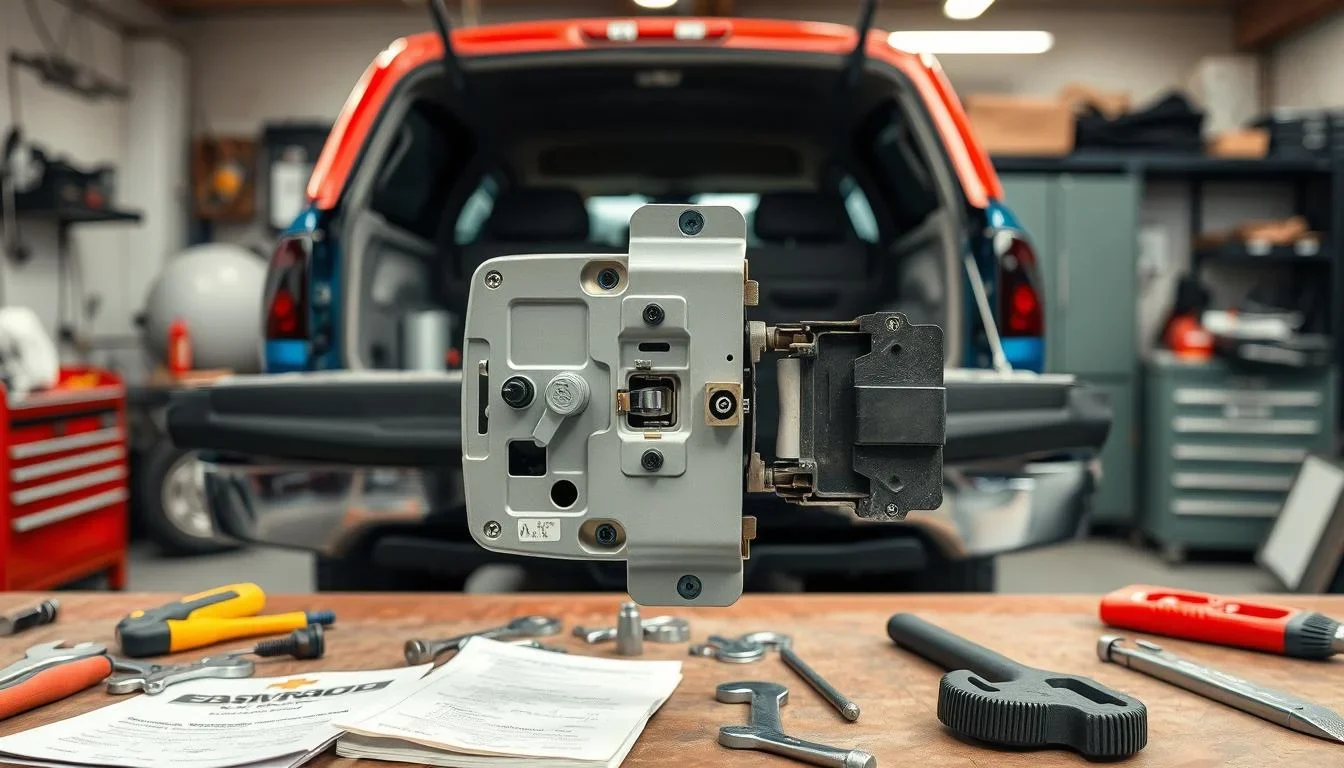
- Ready position: With the tailgate open, the latch opening is clear and the pawl is not blocking the striker path.
- Consistent engagement: The tailgate catches without a hard slam and sits evenly against its seals.
- Secure hold: A gentle lift from the outside does not open or noticeably shift the panel when the release is untouched.
- Normal release: The handle opens the latch without excessive force, sticking, or delayed return.
- No warning signs: The vehicle does not show an open-tailgate warning or leave an interior light on after closure.
For how to reset a tailgate latch to be considered complete, perform these checks on every latch used by the tailgate, not just the side that was easiest to see. A partially engaged latch can hold briefly in the driveway and fail when the vehicle vibrates or turns.
Troubleshooting a latch that will not reset
When the basic reset does not work, avoid adding force. The symptom usually points toward a particular part of the system, although exact designs differ by vehicle.
| What you observe | Likely area to inspect | Next action |
|---|---|---|
| The latch is closed and will not rotate | Debris, corrosion, bent pawl, or internal damage | Clean and lubricate lightly; stop if controlled pressure does not free it. |
| The handle moves but one latch stays still | Disconnected cable, rod, or retaining clip | Inspect the linkage and replace damaged hardware with the correct part. |
| The tailgate catches on one side only | Misaligned striker or inactive second latch | Check both latches and hinge alignment before adjusting anything. |
| A power tailgate reverses or beeps | Actuator, sensor, obstruction, or initialization fault | Use the vehicle procedure and seek service if the fault remains. |
When the handle has no effect
A handle that moves with almost no resistance may have a disconnected cable or rod. If the handle is stiff but the pawl does not move, the latch may be seized or the linkage may be binding. The visible latch can sometimes be reset, but the underlying release fault remains and can leave you locked out again.
When the tailgate will not stay closed
Do not drive with a tailgate that will not positively latch. Check for cargo, a damaged seal, a bent striker, or a latch that was not fully returned to its open position before closing. If the panel sits crooked or requires force on one corner, have the alignment and hinges inspected rather than filing or bending parts yourself.
When the problem returns after a successful reset
A recurring fault often means the latch is contaminated, the return spring is weak, the release cable is misrouted, or the tailgate alignment is changing. Repeating the reset may temporarily restore operation without addressing the cause.
Seek qualified help if you find a cracked latch housing, broken mounting point, bent tailgate structure, damaged wiring, or a power actuator that continues to fault. Also stop if you cannot identify the release mechanism confidently or would need to remove trim near airbags, high-current wiring, or a powered lift system.
Tailgate latch questions beginners often ask
Why is my tailgate latch closed when the tailgate is open?
The latch pawl may have rotated into its closed position after the handle was pulled or the tailgate was shut against an obstruction. It can look locked even though it has not captured the striker. Holding the release handle while carefully rotating the pawl back can return it to the ready position.
Can I use WD-40 to reset a tailgate latch?
A small amount of a suitable penetrating product may help loosen corrosion, but it is not always the best long-term lubricant. Wipe away excess and use the lubricant specified by the vehicle manufacturer or a compatible white lithium product on the latch pivot. Avoid spraying electrical connectors or soaking the assembly.
Should I disconnect the battery before working on the latch?
Not usually for a simple manual latch inspection, but a power tailgate requires extra caution. Follow the owner’s manual before disconnecting power because some vehicles can lose tailgate initialization, memory settings, or safety-system functions. Keeping the power system disabled according to the manufacturer’s instructions is safer than guessing.
What does it mean if the tailgate closes but the warning light stays on?
The latch may not be fully engaged, or its built-in position sensor may not be reporting closure. Check for uneven alignment, a second latch that did not catch, an obstruction, or a damaged actuator. Do not rely on the apparent closure until the warning disappears and the tailgate passes a gentle security check.
Can I drive if the tailgate is held shut by a strap?
A strap is not a reliable substitute for a functioning latch, especially if the tailgate carries cargo or could obstruct lamps and the license plate. Keep the vehicle parked until the latch securely engages or the vehicle is inspected and repaired.
Confirm the latch before putting the vehicle back to work
Resetting a tailgate latch is often a matter of returning a closed pawl to its open position, clearing the mechanism, and checking that every latch engages the striker correctly. Work slowly, keep your hands out of the latch path, and avoid using force when the handle, linkage, or power actuator does not respond normally.
After learning how to reset a tailgate latch, confirm the result with repeated gentle open-and-close cycles, a secure-hold check, and the vehicle’s warning indicators. If the latch will not stay closed, the tailgate is misaligned, or a power system continues to fault, leave the repair to a qualified technician rather than driving with an uncertain closure.