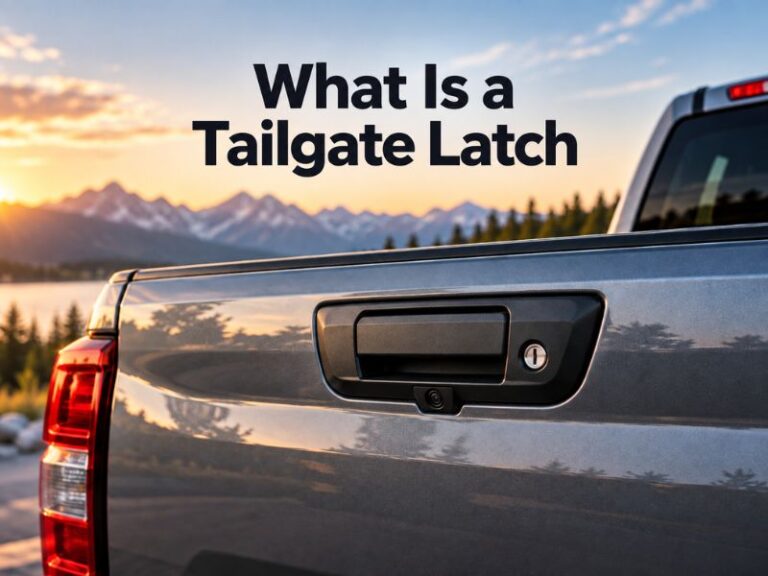
How to Release a Tailgate Latch Safely: A Clear Beginner Guide
A tailgate that will not open can look like a major repair, but the latch is often simply under pressure, partially engaged, dirty, or affected by a weak electrical release. Learning how to release a tailgate latch starts with removing that pressure rather than pulling harder. A controlled approach can free the mechanism without bending the handle, damaging the trim, or putting your fingers in a pinch point.
The exact release varies by vehicle. Some tailgates use an exterior handle and a cable, while others use a power actuator, an electronic button, or a hidden manual lever inside the cargo area. The latch may also be holding against the striker, the metal loop mounted on the body, if the tailgate is loaded, misaligned, or pushed sideways.
This guide explains how to identify the release style, relieve tension, use the safest manual and electrical methods, and check the result afterward. It also covers what to do when the handle moves without resistance, when the tailgate is locked, and when the mechanism should be left for a qualified technician instead of forced.
At a glance
- Relieve pressure on the tailgate before forcing the handle or release button.
- Use the vehicle’s documented manual release when the electrical or exterior control does not work.
- After opening, test both the latch and the lock before driving.
How to Release a Tailgate Latch Safely
Use the procedure below for a conventional hinged tailgate, a liftgate, or a power tailgate with a latch. Because manufacturers place manual releases in different locations, your owner’s manual remains the best source for the exact trim-panel removal points and emergency-release procedure.
Tools you will need
- Owner’s manual or vehicle service information, to identify the correct release and fuse or battery procedure
- Flashlight, to inspect the latch and any interior manual release
- Trim-removal tool, optional, if the vehicle’s instructions require removing an interior access panel
- Silicone-based automotive lubricant, optional, for a dry or dirty latch after it is working

Step 1 Park securely and identify the tailgate release
Park on level ground, set the parking brake, and place the transmission in Park or in the manufacturer-recommended position. Keep the key fob with you, and switch off the vehicle before inspecting the mechanism. If the tailgate is powered, keep people and loose cargo clear of its travel path.
Look for the normal release: it may be an exterior handle, a rubberized button, a cabin switch, or a button on the key fob. Check whether the vehicle is locked. On some models, the tailgate button will not operate until the doors are unlocked or the key fob is detected nearby.
Do not put your fingers between the tailgate and the body or around the latch jaws. The latch can close suddenly when pressure is removed, especially if the tailgate is heavy or supported unevenly.
Step 2 Remove pressure from the latch
Stand behind the tailgate and press it inward toward the vehicle while operating the release handle or button. Use firm, even pressure rather than a shove. If the tailgate is sagging or loaded, have another adult support its weight while you try the release.
This works because the latch may be tightly loaded against the striker. Pushing the tailgate inward can take tension off the latch pawl, the internal metal piece that holds the striker, allowing the handle or actuator to move it. A successful release usually feels like a small change in handle resistance, followed by a slight pop or movement of the tailgate.
Important
Never use your body weight, a pry bar, or a sharp tool to force a stuck tailgate. If the tailgate is carrying heavy cargo or appears twisted, unload it only when safe and keep clear of the opening as the latch releases.
Step 3 Try the normal mechanical release while watching the latch
With pressure relieved, pull the exterior handle or operate the interior switch once. Do not repeatedly yank the handle. If the handle moves normally and the tailgate opens, support it as it drops or swings, since gas struts and power supports may not be holding it correctly.
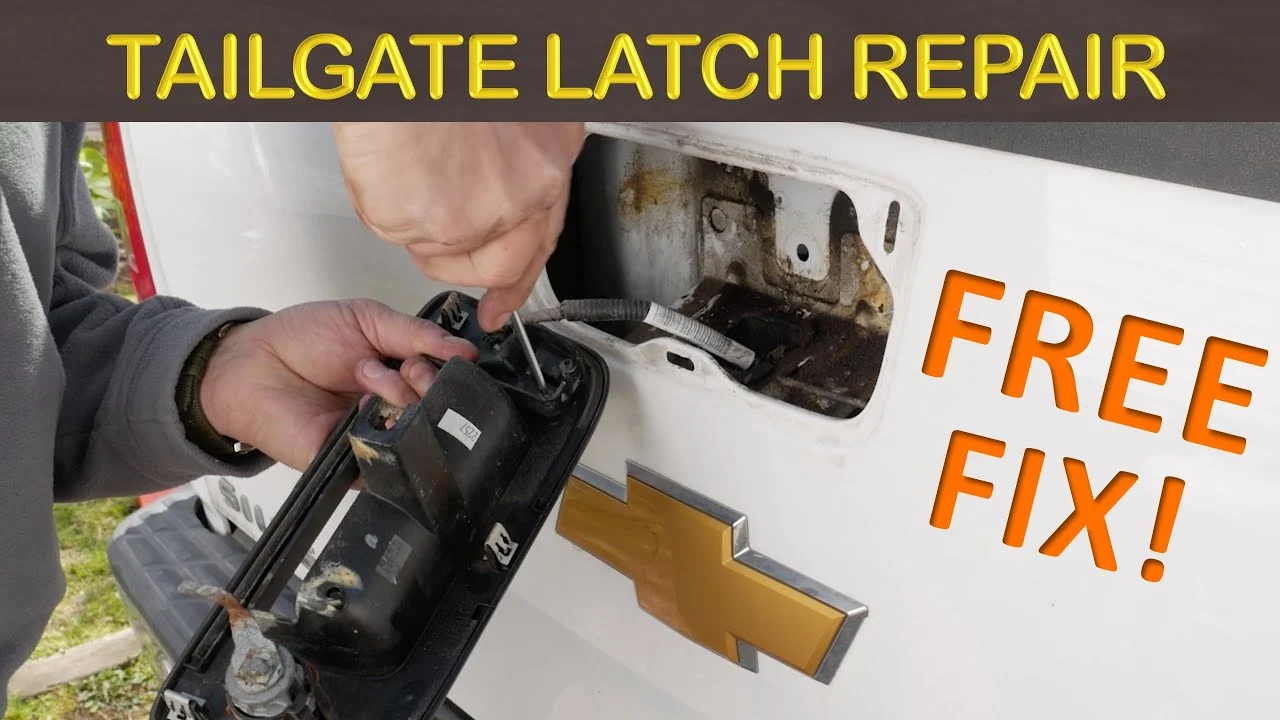
If you can see the latch through a gap, use a flashlight to observe whether the latch jaws rotate or retract. Movement at the latch with no opening usually indicates that the striker is still loaded, the tailgate is misaligned, or a second latch on the opposite side is not releasing. A handle that flops with almost no resistance often points to a disconnected cable, broken rod, or failed handle mount.
On a split tailgate, barn-door configuration, or tailgate with a separately opening glass section, confirm that you are using the correct control. One button may release the glass while another operates the lower panel.
Step 4 Unlock the vehicle and rule out a simple power problem
Unlock the doors with the key fob, the driver’s door switch, or the mechanical key if the fob is not responding. Then try the tailgate release again while standing close to the vehicle. If the fob has a separate tailgate button, hold or press it according to the owner’s manual; button behavior differs among vehicles.
If the interior lights are dim, the instrument panel is inactive, or several electrical systems are failing, the vehicle battery may be discharged. A power tailgate may not release with a weak battery even though the mechanical latch itself is intact. Follow the vehicle’s jump-start instructions rather than connecting a charger or booster randomly, particularly on vehicles with multiple batteries or hybrid systems.
Do not assume that replacing the key-fob battery will fix a tailgate that also fails from the cabin switch. If both controls fail, the problem may involve a fuse, wiring, actuator, body control module, or the latch assembly itself.
Step 5 Use the interior manual release when the outside control fails
If the tailgate remains closed, enter the cargo area through a rear seat, side door, or another available opening. Look on the inside of the tailgate for a small access cover, slot, pull strap, or lever. Some vehicles label this as an emergency tailgate release; others hide it behind a removable trim plug.
Use only the access method described for your vehicle. A plastic trim tool is safer than a screwdriver if a panel must be lifted, because a screwdriver can damage clips, wiring, or the weather seal. Remove only the cover needed to reach the release and keep track of any fasteners.
Operate the manual lever or pull strap in the direction shown by the marking or manual. At the same time, press the tailgate inward if it is under pressure. The latch should click and the tailgate should open enough for you to move outside and support it.
A useful way to approach how to release a tailgate latch is to check your progress after each stage.
Some manual releases are designed only to unlatch the tailgate; they do not override a mechanical lock on every model. If the lever will not move, stop rather than bending it. The release may be locked, blocked by trim, or connected to a failed mechanism that requires service.
Step 6 Release a power tailgate without fighting the motor
If the tailgate is powered and begins to move but stops, wait for it to finish its fault response before trying again. Check for ice, cargo, a floor mat, or another obstruction at the sides and latch area. Keep clear of the hinges and do not manually force the panel while the motor is driving it.
Many power tailgates have a manual release behind an interior access cover. Others require a specific procedure, such as holding the exterior button, using the inside switch, or cycling the ignition. Follow the instructions for that model.
A power liftgate may also need to be reinitialized after the battery has been disconnected, but the initialization sequence is not universal.
If the motor runs but the latch does not release, the actuator may be moving without transferring force to the latch. If you hear repeated clicking, grinding, or straining, stop operating the switch. Continued attempts can overheat the actuator or strip a gear.
Step 7 Open the tailgate fully and inspect the latch and striker
Once the latch releases, open the tailgate slowly and support its full weight. Inspect the latch jaws, the striker loop, and the surrounding sheet metal. Look for leaves, gravel, ice, bent metal, loose trim, a displaced rubber seal, or cargo that has shifted into the closing path.
The latch should be mounted firmly and should not wobble excessively. The striker should be centered in the latch opening rather than rubbing one side. On a two-latch design, inspect both sides because one side can release while the other remains engaged.
Do not manually snap the latch shut while your fingers are near it. If you need to see whether the jaws move, use the handle or release lever from a safe position and keep clear of the moving parts.
Step 8 Clean and lubricate only after the mechanism is free
Brush away loose dirt and wipe visible grime from the latch and striker. If the mechanism is dry, apply a small amount of lubricant intended for automotive latches, following the product instructions. Silicone-based lubricant can be useful around seals and some latch components, while a manufacturer may specify a different grease for the latch itself.
Do not flood the mechanism with oil or spray lubricant onto electrical connectors, the brake components, or the inside of the vehicle. Excess lubricant attracts dust and can migrate onto painted surfaces or upholstery. Move the handle several times after application so the lubricant reaches the contact points.
Cleaning may restore a sticky latch, but it will not correct a bent striker, stretched cable, broken spring, failed actuator, or damaged body panel. Those conditions require adjustment or repair rather than more lubricant.
Step 9 Close, lock, and test the tailgate before driving
Remove tools, trim pieces, and cargo from the latch area. Lower the tailgate gently until the latch engages; do not slam it repeatedly. Confirm that the panel sits flush with the surrounding body and that both sides appear evenly aligned.
Pull upward lightly on the closed tailgate without using enough force to damage it. It should remain secure. Unlock it with the normal handle or button, open it again, and repeat the close-and-check cycle once more.
If the vehicle has a dashboard warning for an open tailgate, verify that the warning clears when the tailgate is fully closed.
For a power tailgate, test opening and closing from the normal controls while standing clear. The movement should be smooth, and the motor should stop at the expected positions without grinding, hesitation, or reversing unexpectedly.
Check your result
A successful repair leaves the tailgate aligned, securely latched, easy to release, and free of open-door warnings. If any of those checks fail, do not rely on the tailgate to hold cargo while driving.
Why a Tailgate Latch Gets Stuck
A tailgate latch is a mechanical holding device, even when an electric actuator operates it. The latch captures a striker mounted to the vehicle body, and the handle, cable, rod, or actuator moves an internal release lever. Problems occur when pressure, contamination, wear, or misalignment prevents that lever from moving far enough.
The most common temporary condition is pressure against the striker. Heavy cargo, a sloped parking position, a damaged bumper, or a tailgate that was closed while overloaded can hold the latch tightly. Pressing inward while operating the release often removes that load.
Understanding how to release a tailgate latch also means recognizing the limits of the method.

Mechanical release versus electronic release
A mechanical release uses a handle, cable, rod, or direct lever. It may still work when the battery is dead. An electronic release uses a switch and an actuator, so it depends on vehicle power, wiring, a fuse, and the control module.
Some vehicles combine both systems: the exterior button sends an electrical signal, while an interior emergency lever provides a mechanical backup.
Knowing which system you have helps narrow the fault. A handle with normal resistance but no release may indicate a loaded or damaged latch. A handle with no resistance suggests a disconnected linkage.
A button that makes no sound may indicate a power or switch problem, while a clicking actuator with no movement points more toward a latch, linkage, or alignment issue.
When a locked tailgate behaves differently
On some trucks, the tailgate lock blocks the handle linkage. Unlocking the doors may not unlock the tailgate if the tailgate has a separate cylinder or if the central locking system has a fault. Use the mechanical key only in the designated lock cylinder and do not force it if it will not turn.
If the tailgate is locked and you cannot reach the interior, the correct solution may be roadside assistance or a locksmith familiar with the vehicle. Drilling the lock or prying the panel can create more damage than the original problem and may compromise the security system.
Troubleshooting a Tailgate That Still Will Not Open
Once you know whether the latch is mechanical, powered, or a combination of both, the symptoms can point toward the next safe decision. The table below is a starting point, not a substitute for model-specific service information.
| What you observe | Possible cause and safe response |
|---|---|
| Handle has no resistance | Disconnected cable, rod, or broken handle. Avoid repeated pulling; inspect the interior release or arrange repair. |
| Handle has resistance, but the latch does not release | Pressure against the striker, dirt, misalignment, or a seized latch. Press inward, inspect after opening, and stop if the handle begins to bend. |
| Power button is silent | Vehicle lock status, discharged battery, fuse, switch, wiring, or control-module issue. Verify the vehicle is unlocked and check the manual-release instructions. |
| Motor clicks or strains | Obstruction, frozen mechanism, weak actuator, or damaged gear. Stop cycling the power control and use the documented manual method. |
| One side remains attached | Uneven alignment or a second latch that has not released. Do not twist the tailgate; seek service if it cannot be freed without force. |
| Tailgate opens but will not latch closed | Obstruction, misaligned striker, damaged latch, or a latch accidentally left in the closed position. Keep the tailgate unloaded and do not drive until it locks securely. |
When to stop and get qualified help
Stop working and arrange professional help if the tailgate is bent, the body around the striker is cracked, the latch is jammed in a visibly damaged position, or the tailgate is supporting a heavy load that cannot be safely removed. A tailgate can be heavy enough to injure someone when it suddenly drops or swings.
Professional assistance is also appropriate when the manual release requires removing trim near airbags, when wiring has been damaged, or when a power tailgate continues to operate unpredictably. Do not bypass a safety switch or connect power directly to an actuator unless the vehicle’s service procedure specifically calls for it.
What not to do
- Do not pry between the tailgate and body with a screwdriver or crowbar.
- Do not pull hard enough to bend an exterior handle or deform the tailgate skin.
- Do not crawl beneath a raised power tailgate or rely on a weak gas strut to support it.
- Do not drive with a tailgate that is closed-looking but not positively latched.
- Do not spray lubricant into an electrical connector or onto nearby brake, tire, or painted surfaces.
How to Confirm the Repair Is Complete
Releasing the latch is only the first part of the job. A tailgate can open normally and still have a dangerous closing or locking problem, so verify the complete cycle before returning the vehicle to regular use.
Check alignment and engagement
With the tailgate closed, compare the gaps on the left and right sides. A small difference may be normal on an older vehicle, but a new uneven gap, rubbing mark, or raised corner suggests misalignment. The latch should engage without an unusually hard slam.
Apply gentle upward pressure at the handle area and near each corner. There should be no obvious lift, looseness, or rattling. If the tailgate moves substantially while latched, the latch or striker may be worn or improperly adjusted.
Check the lock and warning system
Lock the vehicle and try the tailgate control without forcing it. Then unlock the vehicle and confirm that the release works. If the instrument cluster or interior light reports an open tailgate while it is securely closed, the latch sensor may be misaligned or faulty.
For a power tailgate, test the normal opening and closing controls one at a time. Keep your hands, head, pets, and cargo away from the moving panel, and do not interrupt the cycle unless necessary.
Restore the interior and dispose of debris
Replace any access cover and trim clips so that wiring and the weather barrier are protected. Remove dirt and excess lubricant from the latch area, and make sure nothing remains in the striker path. If a trim clip broke during access, replace it rather than leaving the panel loose.
Frequently Asked Questions
These answers address common beginner questions about a stuck or nonresponsive tailgate latch.
Can I release a tailgate latch with a dead vehicle battery?
Often, yes, if the vehicle provides a mechanical interior release. Access it through the cargo area and follow the owner’s manual. Some models require restoring battery power first, and a hybrid or high-voltage vehicle should be handled according to its specific emergency procedure.
Why does pressing the tailgate inward help it open?
The tailgate may be pressing tightly against the striker, loading the latch so its release lever cannot move easily. Pressing inward while operating the handle reduces that tension. If it does not help after a few gentle attempts, forcing the handle is more likely to cause damage than to solve the problem.
What does it mean if the tailgate handle feels loose?
A handle that moves with little or no resistance may have a disconnected cable, rod, broken mounting point, or failed linkage. Look for the interior emergency release if available, but do not keep pulling the loose handle. The linkage will usually need inspection and repair.
Should I use WD-40 on a sticky tailgate latch?
A small amount of a product approved for automotive latch use may help, but the correct lubricant depends on the vehicle and component. Clean the latch first, avoid electrical connectors and painted surfaces, and use the manufacturer’s recommended grease or lubricant when specified. Lubrication will not repair bent or broken parts.
Can I drive if the tailgate closes but the warning light stays on?
No. Treat the warning as evidence that the latch or its position sensor has not been verified. Check for an obstruction and confirm that the tailgate is fully latched.
If the warning remains, keep the vehicle parked or have the latch inspected before carrying passengers or cargo.
Finish by Verifying the Latch, Not Just Opening It
The safest way to release a tailgate latch is to unlock the vehicle, relieve pressure against the striker, use the normal control once, and then follow the vehicle’s documented manual-release method if necessary. Avoid prying, excessive force, and improvised electrical connections.
After the tailgate opens, inspect the latch and alignment, clean the area, and test the complete open-close-lock cycle. If the handle has lost resistance, the body is damaged, the power mechanism strains, or the tailgate will not latch securely, stop using it and arrange qualified repair. That final check is what turns how to release a tailgate latch from a temporary opening trick into a safe, complete solution.