Projector Versus Reflector Headlights: What Is the Difference?
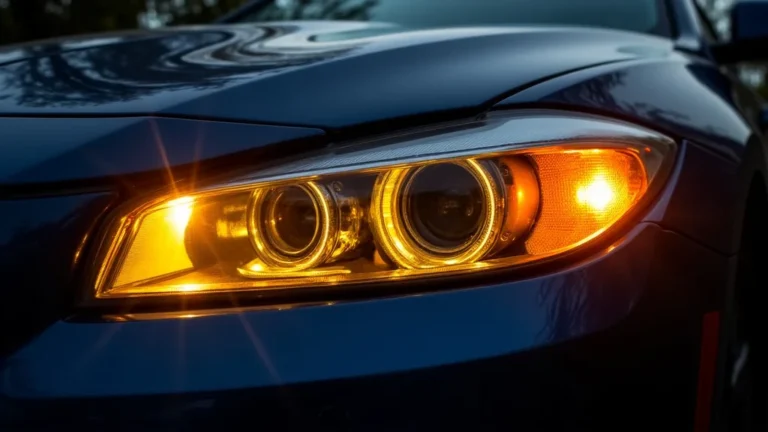
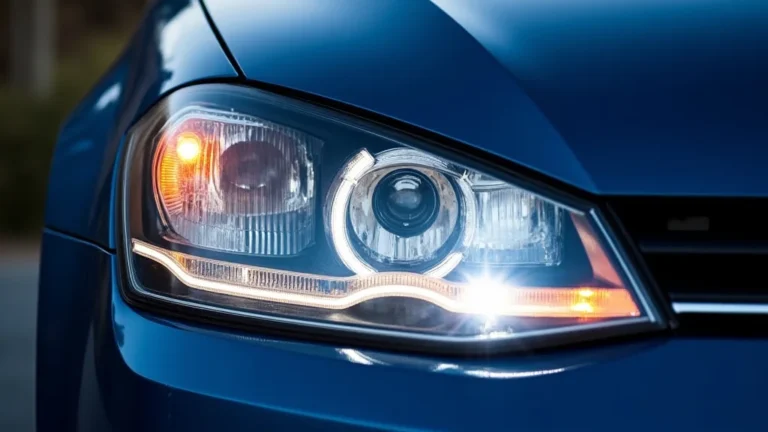
Figuring out the projector vs reflector headlights difference can be a little tricky if you’re just starting. It’s like learning the parts of a car – there’s a lot to take in! But don’t worry, it’s simpler than you might think. This post will break down the differences in a way that’s easy to follow. We’ll go step by step, so you’ll easily grasp how these headlights work, their pros and cons, and how to spot them. Get ready to illuminate your knowledge!
How Headlights Work: An Overview
Before exploring the specific differences between projector and reflector headlights, it’s helpful to have a basic idea of how any headlight works. At their core, headlights are designed to illuminate the road ahead, ensuring visibility for the driver and helping other drivers see the vehicle. The primary components include the light source (bulb), a reflector or projector, and a lens. The light source emits light, which is then directed by the reflector or projector. The lens, usually made of glass or plastic, then shapes and focuses the light beam to create a pattern that effectively lights up the road.
The type of light source can vary. Historically, incandescent bulbs were common, but these are increasingly being
The Role of the Light Source
The light source is the heart of a headlight system. It’s the component that actually produces the light. Different light sources have different strengths and weaknesses. The choices influence everything from the light’s color and brightness to the energy efficiency and lifespan of the headlights. When it comes to projector vs reflector headlights difference, the light source is a key factor because it has an impact on how the headlight performs. Choosing the right light source depends on the design of the headlight system and the overall goals of the vehicle manufacturer.
- Incandescent Bulbs: These are the old-school bulbs, using a filament that glows when electricity passes through it. They produce a warm, yellowish light. However, they are less energy-efficient and have a shorter lifespan compared to modern options.
- Halogen Bulbs: Halogen bulbs are an improvement over incandescent bulbs. They use a halogen gas (like iodine or bromine) to make the filament burn brighter and last longer. The light is still yellowish but slightly brighter than incandescent.
- HID (High-Intensity Discharge) Bulbs: These use an electric arc to create light. They produce a very bright, bluish-white light. They’re more energy-efficient and last longer than halogen bulbs, but can be more expensive.
- LED (Light Emitting Diode) Bulbs: LED bulbs are the most modern type. They are energy-efficient, long-lasting, and can produce a wide range of colors. They’re becoming increasingly popular in cars.
Incandescent bulbs are the original headlight technology. They’re based on a simple design: a thin wire filament inside a glass bulb. When an electrical current flows through the filament, it heats up and glows, emitting light. This process is energy-intensive, and much of the electricity is lost as heat rather than light. The light produced by incandescent bulbs is typically a warm, yellowish color. While these bulbs are inexpensive to produce, their short lifespan and inefficiency have led to their decline in modern cars.
Halogen bulbs work by combining a tungsten filament with halogen gas inside a glass envelope. The halogen gas helps to recycle the evaporated tungsten back onto the filament, which extends the bulb’s life and increases its brightness. They’re relatively inexpensive and offer improved performance compared to incandescent bulbs. However, they are still less efficient than LED or HID bulbs, and their light output is often perceived as less bright.
HID bulbs, commonly known as xenon headlights, use an electric arc generated between two electrodes in a glass capsule filled with xenon gas. When a high voltage is applied, the gas ionizes and produces an intense, bright light. HID bulbs are significantly brighter and more efficient than halogen bulbs. They’re known for their distinctive bluish-white light. The main drawback is the increased cost compared to halogen options.
LED headlights use light-emitting diodes to produce light. LEDs are semiconductors that emit light when electricity passes through them. They are incredibly energy-efficient, converting a higher percentage of electricity into light compared to incandescent or halogen bulbs. LED headlights have a long lifespan, often lasting the lifetime of the vehicle. They are also known for their crisp, white light and can be designed in various shapes and sizes. Although the initial cost can be higher, their longevity and efficiency make them a good option.
The Importance of the Reflector/Projector and Lens
While the light source provides the light, the reflector or projector and the lens are what shape and direct that light to illuminate the road effectively. The reflector or projector’s design controls the beam pattern, which determines how the light is distributed. The lens then focuses and clarifies that beam. A well-designed system ensures that the driver can see clearly without blinding other drivers. The differences in these systems is at the heart of the projector vs reflector headlights difference.
- Reflectors: Reflectors use a polished surface, often shaped like a parabola, to bounce the light from the bulb forward. The shape of the reflector determines how the light is distributed, creating a wide beam.
- Projectors: Projector headlights use a lens and a reflector to focus the light. They create a more concentrated beam, often with a sharp cutoff, preventing glare.
- Lens: The lens is the clear or slightly patterned cover over the headlight. It focuses the light beam and helps distribute it. The lens material affects the durability and clarity of the light.
Reflector headlights use a reflective surface (usually a highly polished metal) to bounce light from the bulb and direct it outward. The design of the reflector determines the beam pattern. The reflector is commonly shaped in a parabolic or multi-faceted manner to control the direction and spread of the light. Reflectors generally offer a wider beam pattern. They tend to be a more straightforward and, therefore, typically more affordable option compared to projector headlights.
Projector headlights use a combination of a reflector and a lens to focus and direct the light. The bulb sits inside a housing, with a reflector behind it to collect and focus the light. The light then passes through a lens, which further refines and projects the beam onto the road. Projectors create a more focused and controlled beam pattern, often with a defined cutoff that reduces glare for oncoming traffic. Projectors are usually more expensive and more complex than reflector headlights, but they offer greater precision and efficiency in light distribution.
The lens sits over the headlight assembly and serves to protect the light source and direct the light. The lens may be clear or have textured patterns that help to refract the light and create a specific beam pattern. Modern lenses are typically made from durable, clear plastics, such as polycarbonate. They’re designed to withstand the harsh conditions of the road environment, including impacts, UV exposure, and temperature changes. The condition and clarity of the lens are important for headlight performance.
Projector Headlights: Detailed Explanation
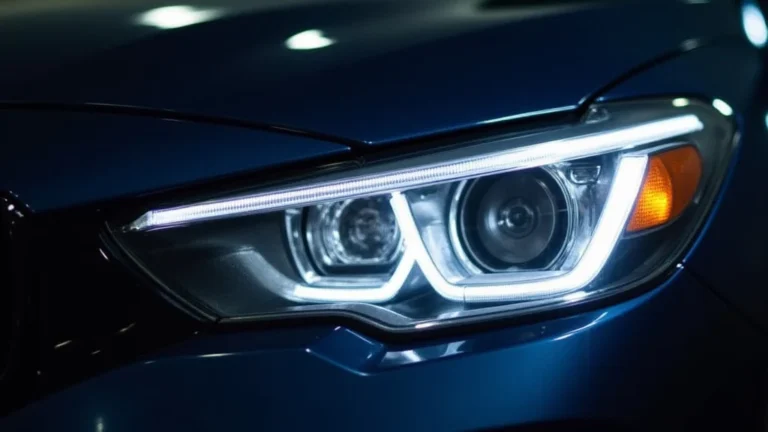
Projector headlights represent a more advanced approach to automotive lighting. They use a system of reflectors, lenses, and sometimes shields to precisely control the light’s direction and focus. This design offers several advantages over reflector headlights, including improved beam control and reduced glare. These are important factors in the projector vs reflector headlights difference.
The core of a projector headlight system consists of a light source, a reflector, a cutoff shield, and a lens. The light from the bulb is collected by a reflector that is usually shaped to focus the light. The light then passes through a cutoff shield, which creates a sharp horizontal line. Finally, the light passes through a lens that projects and focuses the beam onto the road. The result is a concentrated, well-defined beam of light that illuminates the road ahead effectively while minimizing glare for oncoming drivers.
The Components of a Projector Headlight
Understanding the parts of a projector headlight helps in appreciating its function and the projector vs reflector headlights difference. Each component plays a specific role in creating the light beam.
- Light Source: As mentioned before, this can be halogen, HID (xenon), or LED. The choice of light source affects the brightness, color, and efficiency of the headlight. HID and LED bulbs are common choices because they provide high light output.
- Reflector: The reflector collects the light from the bulb and directs it towards the lens. The reflector’s shape is designed to focus the light and contribute to the beam pattern.
- Cutoff Shield: This is a critical feature that defines the upper edge of the light beam. It blocks light from shining upward, preventing glare for oncoming drivers.
- Lens: The lens focuses and projects the light onto the road. Projector lenses are often clear and designed to control the beam pattern.
The light source is the primary element of the projector headlight. It generates the light that is projected onto the road. The light source is usually located at the focal point of the reflector. Common light source choices include halogen, HID, and LED bulbs. Halogen bulbs are the most basic and affordable, offering decent brightness. HID bulbs, also known as xenon bulbs, provide brighter and whiter light, but require a ballast to operate. LED bulbs are the most advanced, offering high efficiency, a long lifespan, and customizable light output.
The reflector in a projector headlight is typically parabolic or a complex multi-faceted surface. Its primary function is to collect and focus the light emitted by the bulb. The design of the reflector, along with the lens, is a key factor in controlling the beam pattern. The shape of the reflector is engineered to direct the light through the cutoff shield and then through the lens, resulting in a well-defined and concentrated beam. The reflective surface is often made from a highly polished metal or coated with a reflective material to maximize light output.
The cutoff shield is a vital component. It’s designed to block light from shining above a certain height, typically at the horizontal level of the headlight. This prevents glare for drivers in oncoming vehicles. The cutoff shield is strategically placed within the headlight assembly, usually between the reflector and the lens. The shape of the cutoff shield determines the edge of the light beam. The sharp cutoff ensures that the headlight illuminates the road without blinding other drivers. This is a key difference when considering the projector vs reflector headlights difference.
The lens is the final component in the light-directing process. It sits in front of the headlight assembly and focuses the light beam onto the road. The lens is usually made of glass or clear plastic. Projector lenses can have a clear design, which allows for a focused and concentrated beam pattern. The lens’s curvature and internal elements are precisely engineered to control how the light refracts and distributes. This results in a defined cutoff line and optimal light output.
Advantages of Projector Headlights
Projector headlights offer several key benefits over reflectors, enhancing both safety and driving experience. The main advantages stem from their design, which allows for a more focused and controlled light beam, making them a good option.
- Improved Beam Control: Projectors offer a precise beam pattern, which is more effective at illuminating the road ahead.
- Reduced Glare: The sharp cutoff prevents light from shining upward, reducing glare for other drivers.
- Enhanced Aesthetics: Projector headlights often have a more modern and stylish appearance.
- Better Performance with LEDs and HID: Projectors work very well with modern light sources like LEDs and HIDs.
Projector headlights are designed to provide superior beam control compared to reflector headlights. The combination of the reflector, cutoff shield, and lens enables the light beam to be shaped and directed with great accuracy. The focused beam pattern illuminates the road more effectively, providing increased visibility for the driver, and minimizing the scatter of light, thereby reducing glare for oncoming drivers. This focused approach to light distribution is essential for better visibility and safe driving.
One of the significant benefits of projector headlights is their ability to significantly reduce glare for other drivers on the road. The sharp cutoff shield is a crucial component in this process. It cuts off the light at a specific horizontal level, preventing it from shining upwards into the eyes of oncoming drivers. This is a critical safety feature, as it allows drivers to maintain better visibility without the distraction or potential hazards of glare. By minimizing glare, projector headlights contribute to a safer driving environment for everyone.
Projector headlights frequently enhance the appearance of a vehicle. The sleek and modern design is often preferred by car enthusiasts and those who value aesthetics. The presence of a projector lens gives the headlights a high-tech and sophisticated look. This can significantly improve a vehicle’s overall design. The design and style of the projector headlights contribute to a more upscale and contemporary appearance, which can be an important factor for many consumers when choosing a vehicle.
Projector headlights are designed to work harmoniously with modern light sources such as LEDs and HIDs. The precise control of the beam pattern provided by the projector lens and reflector system ensures that the full benefits of these advanced light sources are realized. The focused light output of the projector headlights combined with the intensity of LEDs and HIDs results in greater visibility and safety, as the road ahead is more effectively illuminated. This synergy between the projector design and advanced light sources creates an optimal lighting performance. It’s a key point in the projector vs reflector headlights difference.
Reflector Headlights: Detailed Explanation
Reflector headlights are a more traditional type of headlight system. They’ve been used in cars for many years. Instead of using a lens to focus the light, they rely on a reflector to direct the light beam. This design is usually simpler and more cost-effective. However, they can sometimes produce more glare compared to projector headlights.
The core of a reflector headlight system is a light source and a reflector. The light source is positioned inside a housing, and the reflector is designed to bounce the light forward. The shape of the reflector, usually parabolic or multi-faceted, is key to controlling the beam pattern. The light is then diffused through the lens that also serves as a protective cover. The main focus is to provide a wide spread of light. This approach has its own benefits and drawbacks when considering the projector vs reflector headlights difference.
The Components of a Reflector Headlight
Understanding the components helps explain how reflector headlights work and how they differ from projector headlights.
- Light Source: Similar to projector headlights, the light source can be halogen, HID, or LED. The choice affects the brightness and efficiency. Halogen bulbs were a common choice.
- Reflector: This is a curved, reflective surface that directs the light forward. The shape of the reflector determines the beam pattern.
- Lens: The lens is the clear cover over the headlight. It protects the light source and reflector and can also help with light distribution.
The light source is the component that generates the light in a reflector headlight. Just like with projector headlights, the light source is typically a halogen, HID, or LED bulb. Halogen bulbs were the standard for many years, offering a balance of performance and cost. HID bulbs, such as xenon lights, provide greater brightness and intensity, but also come with added complexity and expense. LED bulbs are increasingly popular, offering energy efficiency and a long lifespan. The light source is located within the headlight housing and is positioned to be effectively captured and directed by the reflector.
The reflector is the critical component of the reflector headlight system. It is a curved surface designed to bounce the light from the light source and direct it outward. The shape of the reflector can vary, but it’s often parabolic or multi-faceted. The design determines the beam pattern, influencing how the light spreads across the road. The reflector is usually made of a highly polished metal or a reflective coating. Its purpose is to efficiently capture and redirect the light to illuminate the road ahead. This is a main consideration when understanding the projector vs reflector headlights difference.
The lens is the transparent cover that sits in front of the headlight assembly. It serves a protective function, shielding the light source and the reflector from damage and the elements. The lens can be clear or have a textured pattern. The lens material is usually made of plastic, such as polycarbonate. While the main function is protective, the lens can also play a role in light distribution. The lens may have grooves or patterns designed to further direct the light, creating a broader and more uniform beam pattern. It contributes to the overall function of the headlight and helps to shape the light as it is projected onto the road.
Advantages of Reflector Headlights
Reflector headlights have their own set of advantages, making them a viable option. Their simplicity and lower cost are some of the main attractions.
- Simplicity and Lower Cost: Reflector headlights are often simpler in design, making them more affordable to manufacture and replace.
- Wider Beam Pattern: They often produce a wider beam pattern, which can illuminate a larger area of the road.
- Ease of Maintenance: Generally, they are easy to maintain and the light bulbs are easy to replace.
Reflector headlights stand out for their straightforward design and lower production cost. The construction is generally simpler, with fewer components compared to projector headlights. The design typically involves a light source and reflector, which reduces manufacturing complexity and expenses. As a result, reflector headlights are frequently more affordable to purchase and replace. This makes them an attractive choice for vehicle manufacturers and consumers who seek a balance of functionality and cost-effectiveness. The simplified design contributes to the projector vs reflector headlights difference.
Reflector headlights typically produce a wider beam pattern compared to the more focused beams of projector headlights. The shape of the reflector is designed to scatter the light, creating a broad field of illumination. This wider pattern ensures that a larger area of the road is lit. The wider beam is especially helpful when driving on roads with curves or in areas with limited street lighting. It offers drivers increased visibility of the surroundings. This wider beam is a defining characteristic of reflector headlights.
Reflector headlights are usually considered simpler to maintain. The design of reflector headlights often makes it easier to access and replace the light bulbs. They may require fewer steps or tools. Because of this, bulb replacement is a task that many car owners can do themselves. This ease of maintenance can save time and money. It makes reflector headlights a practical option. Regular maintenance, including bulb replacement, ensures that headlights continue to function well and provide reliable illumination.
Drawbacks of Reflector Headlights
While reflector headlights offer several advantages, they also have some drawbacks, particularly when compared to projector headlights.
- More Glare: The wider beam pattern can sometimes create more glare for oncoming drivers.
- Less Precise Beam Control: The beam pattern may not be as focused or well-defined as with projector headlights.
- Less Effective with Certain Light Sources: May not perform as well with advanced light sources like LEDs and HIDs.
One of the potential drawbacks of reflector headlights is the increased potential for glare. The wider beam pattern may not be as precisely controlled as that of projector headlights. This can result in a more widespread distribution of light. The light, therefore, may be directed higher, potentially shining into the eyes of other drivers on the road. Increased glare not only reduces the visibility of other drivers, but also poses safety risks. Reflector headlight designs are being improved to minimize glare, but it remains a key factor to remember in the projector vs reflector headlights difference.
Reflector headlights often have less precise beam control compared to projector headlights. This is because the design is primarily based on reflecting light from a single source. This can result in a beam pattern that is more diffuse. The beam pattern may not be as tightly focused. This means the light may not be distributed as efficiently or effectively as that of a projector headlight. This can affect visibility and performance, particularly in challenging driving conditions, such as fog or heavy rain. The less precise control is a key factor in the projector vs reflector headlights difference.
Reflector headlights may not always work as effectively with modern, advanced light sources like LEDs and HIDs. The reflector’s design is optimized for specific bulb types. When used with LED or HID bulbs, the reflector may not capture and direct the light as efficiently, potentially resulting in suboptimal performance and beam patterns. The increased brightness of LED and HID lights can also exacerbate glare if the reflector isn’t perfectly matched to the light source. To realize the full potential of these advanced light sources, it’s beneficial to use a headlight system that’s specifically designed to work with them, like projector headlights.
Comparing Projector and Reflector Headlights
To better understand the projector vs reflector headlights difference, let’s compare them side by side.
| Feature | Projector Headlights | Reflector Headlights |
|---|---|---|
| Beam Pattern | Focused, with a sharp cutoff | Wider, with less precise control |
| Glare | Reduced due to the sharp cutoff | More prone to glare |
| Aesthetics | Often more modern and stylish | Simpler, but can still be aesthetically pleasing |
| Cost | Generally more expensive | Generally less expensive |
| Efficiency | Can be more efficient, especially with LEDs and HIDs | Performance varies depending on the light source |
| Maintenance | Can be more complex, but can still be maintained | Generally easier to maintain |
Real-Life Examples and Scenarios
Let’s look at some real-life scenarios to see the projector vs reflector headlights difference in action.
- Scenario 1: Driving on a Dark, Winding Road: Imagine driving on a dark, winding road. With projector headlights, you’ll likely notice the sharp cutoff and focused beam, which makes it easier to see around corners without blinding oncoming drivers. Reflector headlights might illuminate a wider area, but the light might scatter, making it harder to see details on the road.
- Scenario 2: Driving in Heavy Rain: During heavy rain, projector headlights’ focused beam can penetrate the rain more effectively, providing better visibility. Reflector headlights might scatter the light, causing it to reflect off the raindrops and reduce visibility.
In this scenario, the precision of projector headlights shines. The concentrated beam pattern enables the driver to see the curves in the road more easily. They also minimize the light spill that might be reflected back from road signs. With reflector headlights, the wider beam pattern offers good coverage, but the less defined beam can make it harder to see further down the road, especially around curves. The increased glare could also be a problem.
In heavy rain, the effectiveness of the headlights significantly affects driving safety. Projector headlights create a focused beam, helping to cut through the rain and illuminating the road ahead without excessive reflection. This makes it easier for the driver to see. Reflector headlights, with their broader beam pattern, can cause light to reflect off the raindrops, creating glare. This can reduce visibility and make it harder to see the road clearly. This is a crucial area to explore in the projector vs reflector headlights difference.
Statistics and Data Points
Here are some interesting stats related to headlights and road safety:
| Statistic | Source |
|---|---|
| Approximately 40% of all traffic fatalities occur during the hours of darkness. | National Highway Traffic Safety Administration |
| Headlight performance significantly impacts nighttime driving safety, with better headlights contributing to reduced accident rates. | Insurance Institute for Highway Safety |
Frequently Asked Questions
Question: Are projector headlights better than reflector headlights?
Answer: Projector headlights generally offer better beam control and reduce glare, making them superior in many aspects. However, reflector headlights can still provide adequate lighting and are often more affordable.
Question: Can I
Answer: Replacing reflector headlights with projector headlights often requires modifications to your vehicle’s wiring and housing. It’s often recommended to seek professional assistance.
Question: What’s the main difference between the two types of headlights?
Answer: The primary distinction lies in how they direct the light. Projector headlights use a lens and a cutoff shield for a focused beam, while reflector headlights use a reflector to bounce the light.
Question: Do projector headlights use a specific type of light bulb?
Answer: Projector headlights can use various types of light bulbs, including halogen, HID (xenon), and LED. The specific bulb type depends on the design and model of the headlight.
Question: Which type of headlight is more expensive?
Answer: Projector headlights are generally more expensive due to their more complex design and components. Reflector headlights are typically more cost-effective.
Final Thoughts
Now you’ve seen the projector vs reflector headlights difference, it’s clear that both types have their own features. Projector headlights provide superior light control and cut down on glare. This makes them ideal for safe nighttime driving. Reflector headlights, on the other hand, are often more affordable and provide a wider beam pattern. They’re still a reliable choice. The best headlight type depends on your driving needs, your budget, and the features you value most. Regardless of which you choose, keeping your headlights clean and functioning properly is key. You’re now equipped to make a choice that enhances your visibility and safety.