Fog Lights for Rainy Weather Guide for Safe Driving
Driving in the rain can be tricky, and using fog lights for rainy weather is a common topic for drivers. It’s often confusing for new drivers because they aren’t always sure when to use them or if they’re even helpful. Don’t worry, this guide will explain everything in simple terms. We’ll explore the basics and show you how to use your fog lights correctly to stay safe on the road. Get ready for a straightforward solution that will clear up the confusion.
Fog Lights Function and Purpose
Fog lights are extra lights on your vehicle that are made to help you see better in tough weather. They’re usually found on the front and sometimes the back of your car. The main goal of fog lights is to increase your visibility during times of reduced sight due to rain, fog, snow, or other conditions. They are designed differently from your standard headlights. These lights have a wider, flatter beam pattern, unlike standard headlights that shoot the light straight forward. This wider beam lets the light spread out more, which is great for helping you see the road close to your car.
How Fog Lights Work Differently
Regular headlights point light straight ahead. This is good when the air is clear. However, in fog or heavy rain, the light from these headlights bounces off the water droplets or fog particles. This creates glare, which makes it harder for you to see. Fog lights are designed to reduce this glare. They do this by:
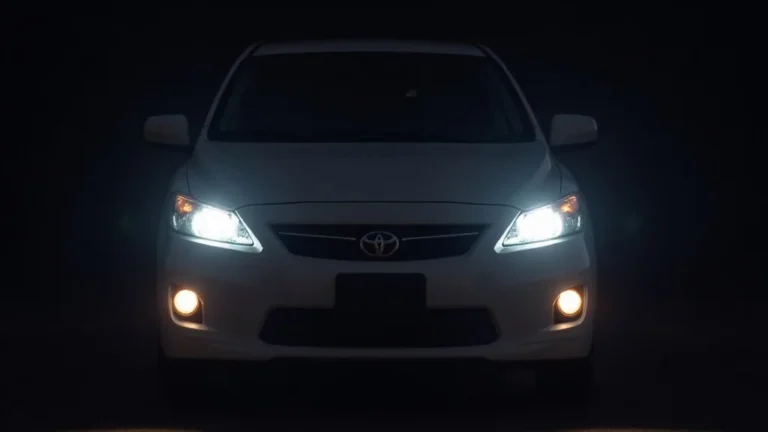
- Position: Fog lights are placed lower on the front of the car. This helps the light beam go under the fog or rain.
- Beam Pattern: Fog lights have a wide, flat beam. This beam lights up the road directly in front of your car. It helps the driver to see the edges of the road and any objects.
- Color: Most fog lights have a yellowish tint. This color helps them cut through fog or rain better than standard white headlights.
It’s important to remember that fog lights don’t replace your headlights. They are designed to work together, improving your visibility in poor weather conditions. These lights are a valuable safety feature, especially in situations where visibility is limited, such as heavy rain or dense fog.
When to Use Fog Lights for Rainy Weather
Knowing when to use fog lights for rainy weather is essential for safe driving. You should only turn on your fog lights when visibility is reduced. The exact conditions can vary. You should consider using them when it is hard to see clearly. This can happen with heavy rain, dense fog, or thick snow. These lights are not meant for regular use in clear weather. Using them then can bother other drivers. They are designed for situations where visibility is dramatically reduced.
- Heavy Rain: If the rain is so heavy that you can’t see more than a few car lengths ahead, then it’s time to turn on your fog lights.
- Dense Fog: Fog can severely limit your vision. Fog lights can help you see through the fog.
- Snow: In snowy conditions, fog lights can help to show the road. They can show you any objects in front of you.
- Reduced Visibility: If visibility is reduced for any reason, use your fog lights to increase your sight.
Always remember to turn off your fog lights when conditions improve. You should make sure that you do not leave them on in clear weather. This simple action will improve safety for everyone on the road. A survey by the AAA Foundation for Traffic Safety found that many drivers are confused about fog light usage. About 20% of drivers were observed using fog lights unnecessarily. Making sure you use your lights the right way can reduce these risks.
Identifying and Understanding Fog Light Features
Understanding the features of your fog lights helps you use them correctly. You should be familiar with their location and how to turn them on. Fog lights usually have a distinct design, like their placement and the type of light they emit. You should know the basics of their operation.
Locating Your Fog Lights
Fog lights are usually located in the front bumper. You might also find them on the rear of your car. These lights are often smaller and set lower than your regular headlights. This low placement is critical. It helps the lights to shine beneath fog or rain. They are usually a different shape than your headlights. This shape helps you easily identify them. Check your car’s manual if you can’t find them right away.
In addition to the physical placement, you need to understand how to turn them on. There will be a switch somewhere in the cabin, usually near the steering wheel or the dashboard. This switch often has a special symbol that looks like a light with lines running through it. This symbol is a visual clue. It helps you quickly identify the fog light control.
Fog Light Switch and Indicators
The switch to turn on your fog lights is normally found inside your car. It might be located on the dashboard or the steering column. The switch typically has a unique symbol. It looks like a headlight with lines going through it. This symbol will help you recognize the switch. You should consult your car’s owner’s manual if you are having problems locating the switch. It can also vary from car to car.
When you turn on your fog lights, you’ll see an indicator light on your dashboard. This light will tell you that the fog lights are on. It is usually a green light that has the same symbol as the switch. The indicator light is your visual confirmation. It lets you know that your fog lights are functioning. Being aware of these indicators lets you know that your fog lights are active. This helps you to adjust your driving.
Best Driving Practices in Rainy Conditions
Driving in the rain requires extra care. Safe driving depends on things such as visibility, speed, and vehicle control. You need to adapt your driving style. You should use the right equipment to keep safe. This is especially true when it comes to dealing with fog lights for rainy weather. Here is a guide to some driving practices.
Maintaining Safe Speed
Your speed should be reduced when driving in the rain. Roads become slick, which causes reduced traction. This increases your stopping distance. You need to slow down to give yourself more time to respond. The amount you slow down depends on how heavy the rain is. You should adjust your speed according to the visibility. If you can only see a short distance, you should drive very slowly.
- Reduce Speed Significantly: You should reduce your speed. A good rule of thumb is to reduce your speed by at least one-third.
- Increase Following Distance: Increase the space between you and the car in front of you. This gives you time to react if the car ahead brakes.
- Be Prepared to Stop: Always be ready to brake. You should watch for hazards like puddles, debris, and other vehicles.
Driving too fast for the conditions is a major cause of accidents in the rain. Statistics show that the risk of a crash increases with rain. This risk is higher at higher speeds. It is better to arrive late than to not arrive at all.
Using Headlights and Fog Lights
Always use your headlights in the rain. They help you to see. They also help other drivers see you. You may also use fog lights when visibility is reduced. But, remember that fog lights are not meant to be used all the time. They are useful in situations with heavy rain or fog.
- Use Headlights: Turn on your headlights to improve your sight. It helps other drivers see you.
- Use Fog Lights for Visibility: Activate fog lights only when visibility is poor, such as during heavy rain or fog.
- Turn Off When Not Needed: Turn off your fog lights when conditions improve. This will avoid any glare for other drivers.
- Check Lights Regularly: Make sure your headlights and fog lights are working. Inspect them regularly for damage.
Driving with your lights on is more than just a good idea. Many states require it by law. Remember, headlights and fog lights improve your safety. They improve the safety of other road users.
Avoiding Hydroplaning
Hydroplaning happens when your tires lose contact with the road because of water. This means your vehicle starts to float on the surface of the water. It can happen at high speeds, and you lose control of your vehicle. Driving slowly, having proper tires, and avoiding sudden actions can help you prevent it. If you feel your car hydroplaning, stay calm. Take your foot off the gas and steer gently in the direction you want to go. Do not slam on the brakes, which can make it worse.
Additional Safety Tips
- Check Tire Condition: Make sure your tires have enough tread depth and are properly inflated. This improves traction.
- Use Windshield Wipers: Be sure your wipers are working well. Replace them if they are streaking or worn out.
- Avoid Cruise Control: Do not use cruise control in rainy conditions. It might make it harder for you to react to sudden changes.
- Stay Alert: Pay close attention to the road and the conditions. Keep your focus on the task of driving.
By following these tips, you can greatly improve your safety. Remember that driving in rainy conditions needs extra caution. Make sure that you are prepared. The most important thing is to be attentive to the road.
Comparative Analysis of Fog Lights vs. Headlights
You can understand the benefits of fog lights. They work differently compared to standard headlights. You can learn how these lights contribute to improved safety. You should understand the distinctions between fog lights and headlights. You should understand when to use each.
Differences in Design and Function
Headlights are designed for general road illumination. They emit a strong beam of light. This beam illuminates the road ahead. Headlights help you see the environment. They help other drivers see your vehicle. Fog lights are designed for use in bad weather. Their design helps them improve visibility in rain or fog.
The design of the lights determines how they work. Headlights are designed to shine straight ahead. Fog lights have a wide, flat beam. This design helps the beam to stay low. It also helps to prevent light from reflecting off the rain or fog. Regular headlights might cause glare in these conditions. Fog lights help reduce this effect.
Visibility and Glare Reduction
Headlights and fog lights have different effects on visibility. Headlights are effective in clear conditions. They provide light for long distances. Fog lights are designed to improve visibility in bad weather. They reduce glare and improve the ability to see close to your vehicle.
| Feature | Headlights | Fog Lights |
|---|---|---|
| Beam Pattern | Narrow and focused | Wide and flat |
| Placement | Higher on the vehicle | Lower on the vehicle |
| Purpose | General illumination | Improved visibility in adverse conditions |
| Glare Reduction | Can create glare in fog or rain | Minimize glare |
You should understand how fog lights work. You should compare them to the function of headlights. Headlights give overall light. Fog lights improve visibility in difficult conditions. You can use these lights safely when you understand their functions.
Optimal Usage Scenarios
You should know the ideal conditions for using each type of light. Headlights are best used at night or when visibility is low. They help you see and help other drivers see your vehicle. Headlights are essential for driving in the dark. They are also useful in situations with reduced visibility, such as during dusk or dawn. They should be on any time it’s difficult to see.
Fog lights should be used when visibility is very low. This includes heavy rain, thick fog, or snow. You should turn them on when you cannot see clearly. You can see objects on the road at a short distance. You should avoid using fog lights when conditions are clear. The lights may cause glare. They may also bother other drivers. The goal is to use the lights to make driving safer in the most difficult situations. They are most helpful when used in adverse conditions. The right use of these lights improves safety for every driver.
Frequently Asked Questions
Question: Can I use fog lights all the time?
Answer: No, fog lights are not meant for all-time use. They are designed for use only when visibility is reduced.
Question: What do I do if my fog lights are not working?
Answer: Check the bulbs and fuses. You might need to take your car to a mechanic for further inspection.
Question: Can fog lights replace headlights?
Answer: No, fog lights cannot replace headlights. Headlights provide general illumination. They are necessary for night driving.
Question: Are fog lights required by law?
Answer: The use of fog lights is controlled by local and state laws. You must consult your local laws.
Question: How can I tell if my fog lights are on?
Answer: The dashboard will have an indicator light. This light shows that your fog lights are on.
Final Thoughts
Using fog lights for rainy weather properly is a simple way to stay safer on the road. Remember, fog lights work best when visibility is low due to rain, fog, or snow. They are not for everyday use. The flat beam design of fog lights helps cut through these conditions. You should always use headlights at night or when it’s hard to see. Keep your speed in check and increase the distance between your car and the one in front of you. Regular checks of your car’s lights, wipers, and tires are essential. By understanding how to use your car’s lights correctly and driving with care, you can make every trip safer, especially during wet weather. Drive smart, and be prepared for changing conditions.