Are Purple Headlights Legal? A Guide for Motorists
Picture this: you’re cruising down the street, admiring the cool, customized cars you see. Then, you spot a vehicle with vibrant, purple headlights. They certainly stand out! But the question pops into your head – are they even allowed? This is a common query among car enthusiasts and anyone interested in automotive modifications. In this article, we’ll explore the legality of purple headlights, what the rules say, and what you need to know to stay on the right side of the law. You’ll gain valuable knowledge that saves you from potential fines or issues, while also learning about other headlight colors and their regulations. This will help you make informed decisions about your vehicle.
Headlight Colors and the Law
The rules regarding headlight colors are often quite specific, varying by state and sometimes even by local ordinances. Generally, the colors permitted for headlights are limited to white or amber (yellowish-orange). These colors are chosen because they offer the best visibility at night and in various weather conditions. Other colors, like blue, red, or, of course, purple, are often restricted or entirely prohibited. The rationale behind these restrictions stems from safety concerns. Non-standard colors can confuse other drivers, reduce visibility, and potentially lead to accidents. Each state has its own vehicle code that outlines these regulations, so it’s essential to research the specifics in your area.
Why Are Certain Headlight Colors Restricted?
The restrictions on headlight colors, especially those like purple, exist to maintain road safety and minimize confusion for other drivers. Standard headlight colors are designed for optimal visibility and recognition. The primary purpose of headlights is to illuminate the road ahead and make your vehicle visible to others, especially during low-light conditions. Non-standard colors can interfere with this purpose. Colors like purple, red, and blue may be associated with emergency vehicles or may simply be harder for the human eye to perceive quickly, potentially leading to delayed reactions and increasing the risk of accidents. The variations in light wavelengths also impact how far the beam can travel. This makes it difficult to judge distance and speed. Also, drivers might not know the vehicle’s intentions when using atypical colors, contributing to hazardous situations.
- Visibility Issues: Unusual colors like purple can be difficult to see in certain conditions, such as fog or heavy rain.
- Association with Emergency Vehicles: Some colors, like red and blue, are reserved for emergency vehicles, and using them on civilian cars can cause confusion.
- Distraction and Confusion: Non-standard colors can distract other drivers and make it harder to quickly identify a vehicle’s position or direction.
- Reduced Visibility Distance: The wavelength of light from different colors affects how far the light can travel and how well it illuminates the road.
Headlight Color Regulations by State
Vehicle codes vary significantly by state. Some states have very detailed laws specifying approved and prohibited headlight colors. Others may only have general guidelines or rely on federal standards. You should always consult your state’s motor vehicle department or a legal expert. To obtain information about your state’s regulations, start by visiting your state’s Department of Motor Vehicles (DMV) or equivalent agency’s website. Search for “vehicle code” or “lighting regulations” to find the relevant laws. These documents will clearly outline which headlight colors are permitted and which are not. You can also consult with a local law enforcement agency. They can often provide specific information about local ordinances and how they apply to headlight modifications. The bottom line? It’s important to familiarize yourself with the laws specific to your area.
For example, in California, the vehicle code specifies that headlights must emit white or yellow light. Other colors, including purple, are not allowed. In New York, the regulations are similar, generally restricting headlights to white or amber. If you live in a state where purple headlights are illegal, you could face fines, or even a vehicle inspection failure. It’s better to be informed and prepared rather than risk a penalty.
Are Purple Headlights Legal: The Specifics
Generally, are purple headlights legal? The answer is almost always no. Purple (and violet) headlight colors are almost universally prohibited due to the safety concerns and regulations around vehicle lighting. The specific reasons involve visibility, potential for confusion, and the enforcement of uniform lighting standards for safety purposes. While the color itself is visually striking, the legal ramifications of using purple headlights are usually substantial. The enforcement of these rules falls to law enforcement officers, who are authorized to issue citations for violations of vehicle lighting laws.
Legal Consequences of Using Purple Headlights
If you’re caught driving with illegal purple headlights, you’re likely to face a range of consequences. These consequences can vary depending on the specific location and the severity of the violation, but they usually include fines. The fines can be relatively minor for a first offense but might increase for repeat offenses. In some areas, you could be required to fix the issue and have your vehicle re-inspected to prove compliance with the law. In more serious instances, especially if the illegal headlights are deemed to be a significant safety hazard, your vehicle could be impounded. Furthermore, the use of illegal headlights might affect your car insurance. Your insurance company could deny a claim if an accident occurs, as an illegal modification may be seen as a violation of your policy terms. Always adhere to state and local regulations!
Exceptions and Circumstances
While purple headlights are largely prohibited, there might be a few exceptions. These are rare and typically involve very specific situations. For example, some show cars or vehicles used exclusively for off-road purposes may be granted special permits. Another instance would be specialized vehicles used on private property, or for display purposes. These permissions are not standard and would require approval from local authorities. These exceptions are definitely not the norm. It is also important to note that even in these scenarios, the use of purple headlights on public roads remains illegal. So, if your intention is to drive a vehicle on public roads, the use of purple headlights will most likely violate your local laws.
Modifying Your Car’s Lighting
If you are looking to enhance your car’s appearance, there are ways to improve your vehicle’s lighting without running afoul of the law. There are numerous modifications you can make that are both legal and aesthetically pleasing. From upgrading to brighter, whiter LED bulbs to installing stylish aftermarket tail lights, your options are extensive. Always remember that any lighting modifications need to conform to state and local regulations regarding color, brightness, and positioning. It’s a great way to personalize your car while ensuring safety and compliance. When making changes to your vehicle’s lighting system, safety is always first. It’s important to prioritize the visibility of your vehicle and ensure that your modifications don’t interfere with the ability of other drivers to see and react to you on the road.
Legal Alternatives to Purple Headlights
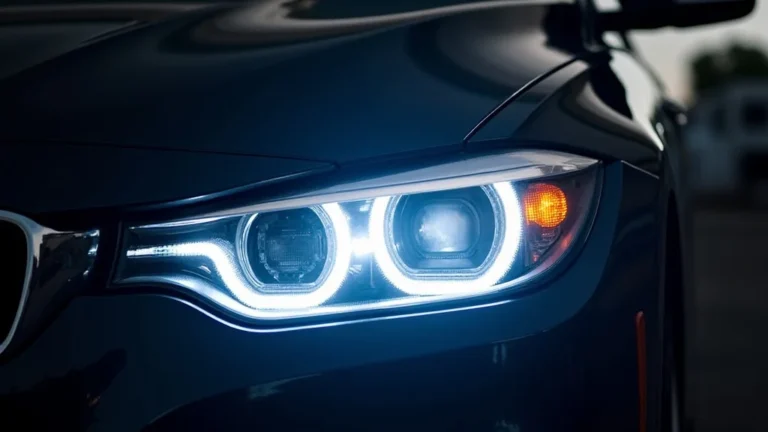
You can achieve a unique look without using illegal colors. LED bulbs offer a wide range of color temperatures, from cool white to warm white, enhancing your vehicle’s appearance. You can explore different bulb styles and designs to match your car’s style, such as projector headlights or halo rings. These modifications can improve both the look of your vehicle and increase visibility. Remember that these features must adhere to local rules and regulations. This means they should produce approved colors (usually white or amber) and meet brightness and positioning standards. By focusing on legal modifications, you ensure your car looks great while remaining safe and compliant with all applicable laws.
- White LED Headlights: These offer a clean, modern look and excellent visibility.
- Amber/Yellow Fog Lights: These are often permitted and can improve visibility in foggy conditions.
- Aftermarket Tail Lights: Many designs are available that provide unique styling while remaining legal.
- Headlight Tinting/Film (with limitations): Some states allow tinted headlights, provided they meet light transmission requirements.
The Importance of Compliance
Staying compliant with vehicle lighting laws is essential for several reasons. First, it ensures that your car operates safely and does not pose a hazard to other drivers. Illegal modifications can reduce your vehicle’s visibility, increasing the risk of accidents. Adhering to the law also helps you avoid fines and potential legal issues. It demonstrates that you are a responsible driver and are committed to road safety. Also, compliance helps you maintain your car insurance coverage. Using illegal equipment may violate the terms of your insurance policy, making it invalid in case of an accident. Always verify your vehicle modifications comply with state laws.
Consider this real-life scenario: A driver installs illegal purple headlights on their car and is pulled over by a law enforcement officer. The officer issues a citation for violating the vehicle code. The driver is also required to remove the illegal headlights and
Regulations and Road Safety
The rules governing vehicle lighting aren’t just about aesthetics; they directly impact road safety. These regulations are designed to minimize risks and ensure that all vehicles can be readily seen and identified by other drivers. Headlights, taillights, and turn signals must meet specific criteria to provide optimal visibility in different driving conditions. The primary goal is to provide a safe road for everyone. Non-compliance can significantly increase the chances of accidents. When vehicles use non-standard lighting, it can confuse other drivers, and reduce their reaction time. Always prioritize safety on the road!
How Lighting Impacts Driver Perception
The color and intensity of a vehicle’s lights influence how drivers perceive the vehicle. The human eye has difficulty processing certain colors quickly, especially at night or in adverse weather. Standard colors, like white and amber, are chosen because they offer the best balance of visibility and recognition. The placement and brightness of headlights also play a part. Bright, correctly aligned headlights are essential for illuminating the road ahead and allowing drivers to see obstacles and other vehicles in time. Poorly placed or too bright lights can blind other drivers. Similarly, dim or improperly aimed lights can significantly reduce visibility for the driver, increasing the chance of an accident. Following these recommendations helps ensure that all drivers can accurately perceive their surroundings and respond appropriately.
Consider an example: a car with blue headlights drives at night. The blue light makes it hard for other drivers to judge the car’s distance. One driver does not see the vehicle until the last moment and is involved in a collision. Alternatively, a car with dim or improperly aimed headlights doesn’t illuminate the road, causing the driver to swerve into another lane. These scenarios underscore how crucial standard, well-maintained lighting is for driver safety. Using the right type of lighting is a critical part of safe driving.
| Headlight Color | Visibility | Legality | Road Safety Impact |
|---|---|---|---|
| White | High; excellent in all conditions | Legal | Enhances visibility for all drivers |
| Amber/Yellow | Good; effective in fog | Legal | Improves visibility in poor weather |
| Blue | Moderate; can be confusing | Often illegal | Can be disorienting and reduce reaction times |
| Purple | Low; difficult to see | Almost always illegal | Reduces visibility and can cause confusion |
Frequently Asked Questions
Question: Are purple headlights legal anywhere?
Answer: It’s extremely rare. In the vast majority of jurisdictions, purple headlights are prohibited on public roads.
Question: What’s the main reason purple headlights are illegal?
Answer: Safety. The main reason for the illegality of purple headlights is that they can reduce visibility and confuse other drivers.
Question: What happens if I get pulled over with purple headlights?
Answer: You’ll likely receive a citation, a fine, and a requirement to
Question: Can I change my headlights to any other color?
Answer: No, the legal colors are usually limited to white or amber. Check your local laws for specific requirements.
Question: Are there exceptions for show cars or off-road vehicles?
Answer: Possibly, but only with specific permits. The rules vary, and you’d have to get prior approval.
Final Thoughts
So, are purple headlights legal? Generally, no. While the allure of customization is strong, the regulations on vehicle lighting, specifically the ban on purple headlights, are well-established and enforced. These rules aren’t arbitrary; they are essential for road safety. They minimize confusion and maximize visibility for all drivers. If you’re considering modifying your car’s lighting, always prioritize compliance with your state’s vehicle code. Choose legal alternatives, and prioritize road safety. By staying informed and following the law, you can make informed choices about your vehicle without running into trouble or endangering others. Drive safe, and make sure your car’s lighting is both stylish and compliant!